Published: Sep-2026 | Category: General
What do we actually know, and how do we know it? It sounds like a philosophical question, but it also sits at the heart of good science.
Science gives us powerful ways to investigate the world. We can observe, measure, experiment and test ideas against evidence. Yet collecting evidence is only part of the process. We must also decide what that evidence supports, what it does not show and what still remains uncertain.
Imagine that researchers observe changes in the brain when someone experiences an emotion. Using suitable instruments, they may be able to measure patterns of activity and compare them under different conditions.
That is a scientific finding: something observable has been measured and recorded. It may help us explain where and when changes occur in the brain.
But does describing that brain activity fully explain the personal experience of feeling happy, afraid or excited? This is where philosophy becomes useful. It asks us to examine what we mean by words such as experience, consciousness and explanation.
Science can investigate what happens. Philosophy helps us question whether our explanation captures everything we are trying to understand.
In science, it is easy to move too quickly from:
“This is what we observed.”
to:
“This is what it means.”
The second statement may be a reasonable interpretation, but it is not simply another measurement. It depends on the quality of the evidence, the assumptions being made and whether other explanations have been considered.
A careful scientist asks:
These are scientific questions, but they are also philosophical ones. They encourage us to test the reasoning that connects a result to a conclusion.
The scientific method is not a rigid recipe. It is a way of turning curiosity into knowledge through a repeating process:
Question → Hypothesis → Prediction → Test → Evidence → Analysis → Conclusion → New question
Each stage matters. A vague question can lead to an unclear investigation. Poor measurements can produce weak evidence. A conclusion that goes beyond the results can create an explanation the investigation has not actually tested.
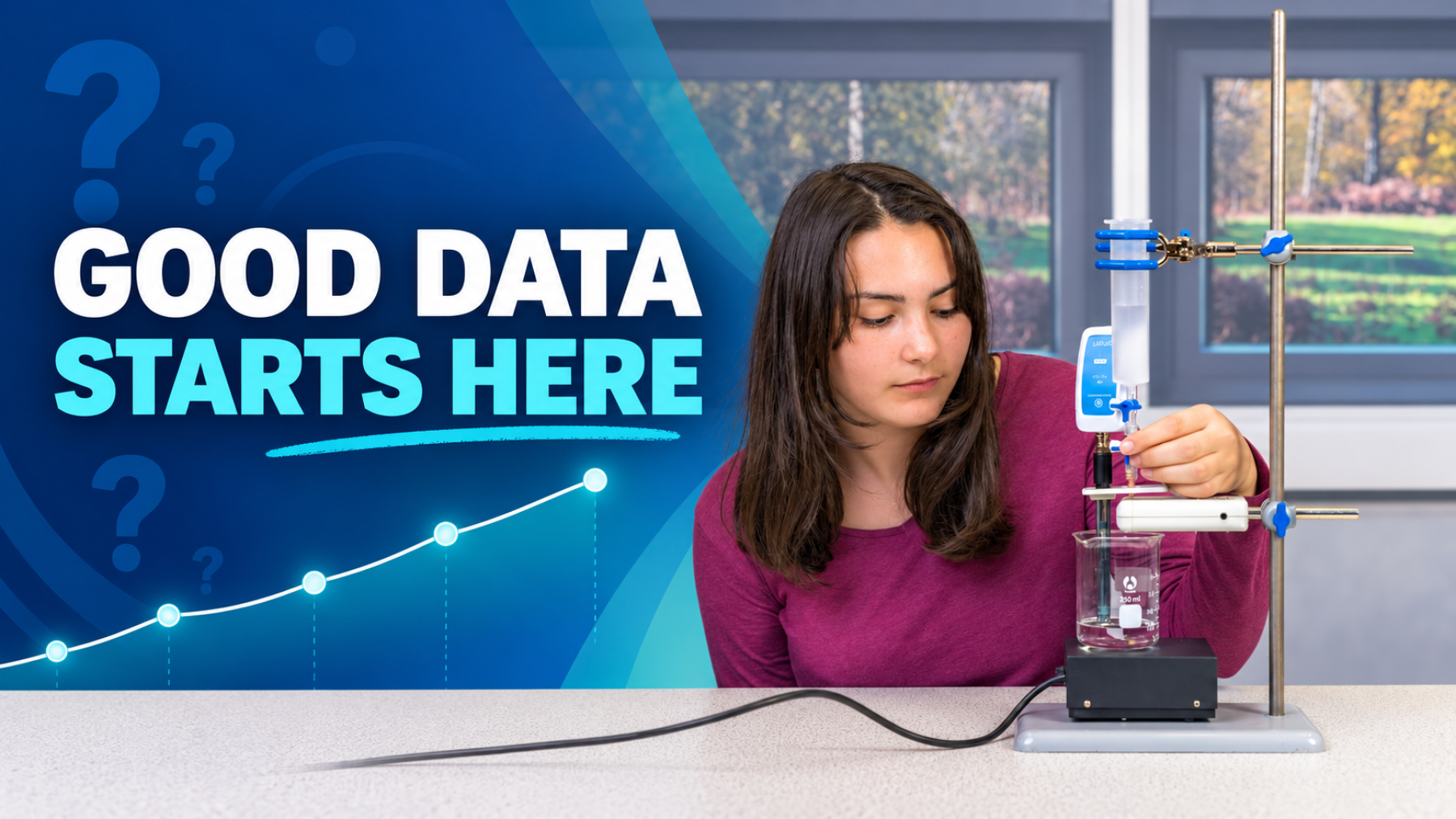
Good practical science therefore depends on more than collecting numbers. Students need to choose suitable measurements, control relevant variables, look for patterns, investigate unusual results and recognise the limits of their data.
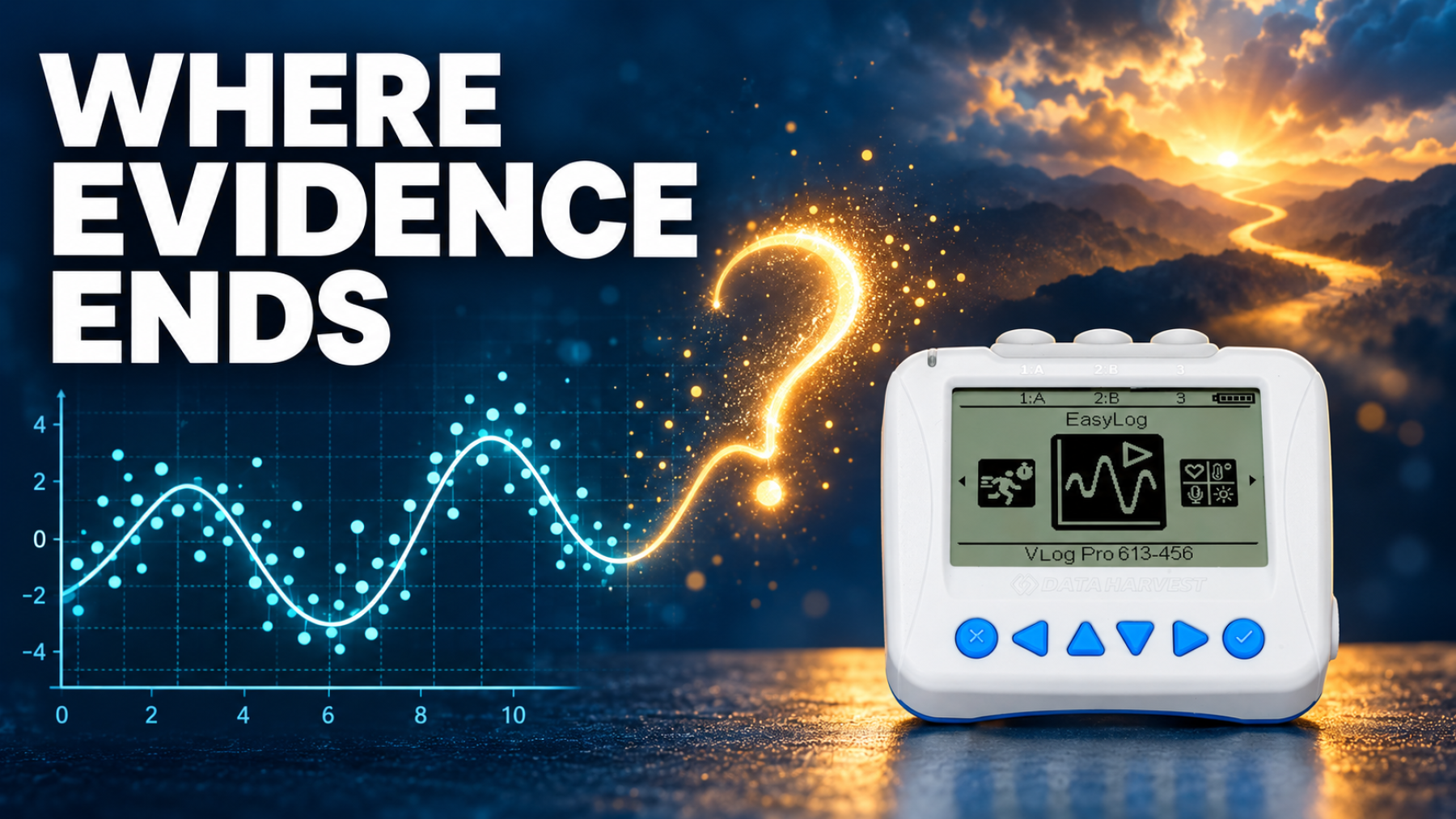
A V-Log Pro data logger can help students capture, review and compare measurements. The equipment supplies the data, but students must still decide what those measurements justify them in saying.
Artificial intelligence provides a modern example of the boundary between evidence and meaning.
Science can investigate whether an AI system can recognise patterns, learn from data, solve particular problems or produce convincing human-like responses. Its performance can be tested, measured and compared.
Philosophy asks a different question: if an AI behaves intelligently, does it actually understand?
Answering that depends partly on what we mean by intelligence and understanding. Is successful behaviour enough? Does understanding require awareness? How could we test for something that cannot be observed directly?
The aim is not to dismiss scientific evidence. It is to be precise about what the evidence demonstrates and where interpretation begins.
Science is powerful because its explanations can be challenged. Other people can repeat an investigation, test its predictions and examine whether the same conclusion follows from the evidence.
If better measurements become available, an explanation can be refined. If a result cannot be reproduced, scientists can investigate why. If a model makes poor predictions, it can be improved or replaced.
This does not make science weak or unreliable. It is how scientific knowledge becomes more dependable over time. Science does not promise permanent certainty; it provides a systematic way to identify when an idea may be wrong.
Students can use the following prompts after any practical investigation:
The same questions can be applied to scientific claims in news reports, online videos, advertising and AI-generated content. They help students distinguish a measurement from an interpretation and confidence from certainty.
A strong conclusion does not pretend to know more than the investigation can show. It separates:
Science tests ideas against evidence. Philosophy challenges the assumptions and meanings behind those ideas. Together, they help us build conclusions that are clearer, more honest and open to improvement.
Sometimes the most valuable outcome of an investigation is not a final answer. It is a better question.
The accompanying worksheet explores why we do science, how the scientific method turns curiosity into evidence and why scientific knowledge can change as new evidence appears.
Take a look at the following articles from the same topic.