Published: May-2026 | Category: Fun With Science
How does pulling back a catapult further affect how fast and how far a marshmallow travels?
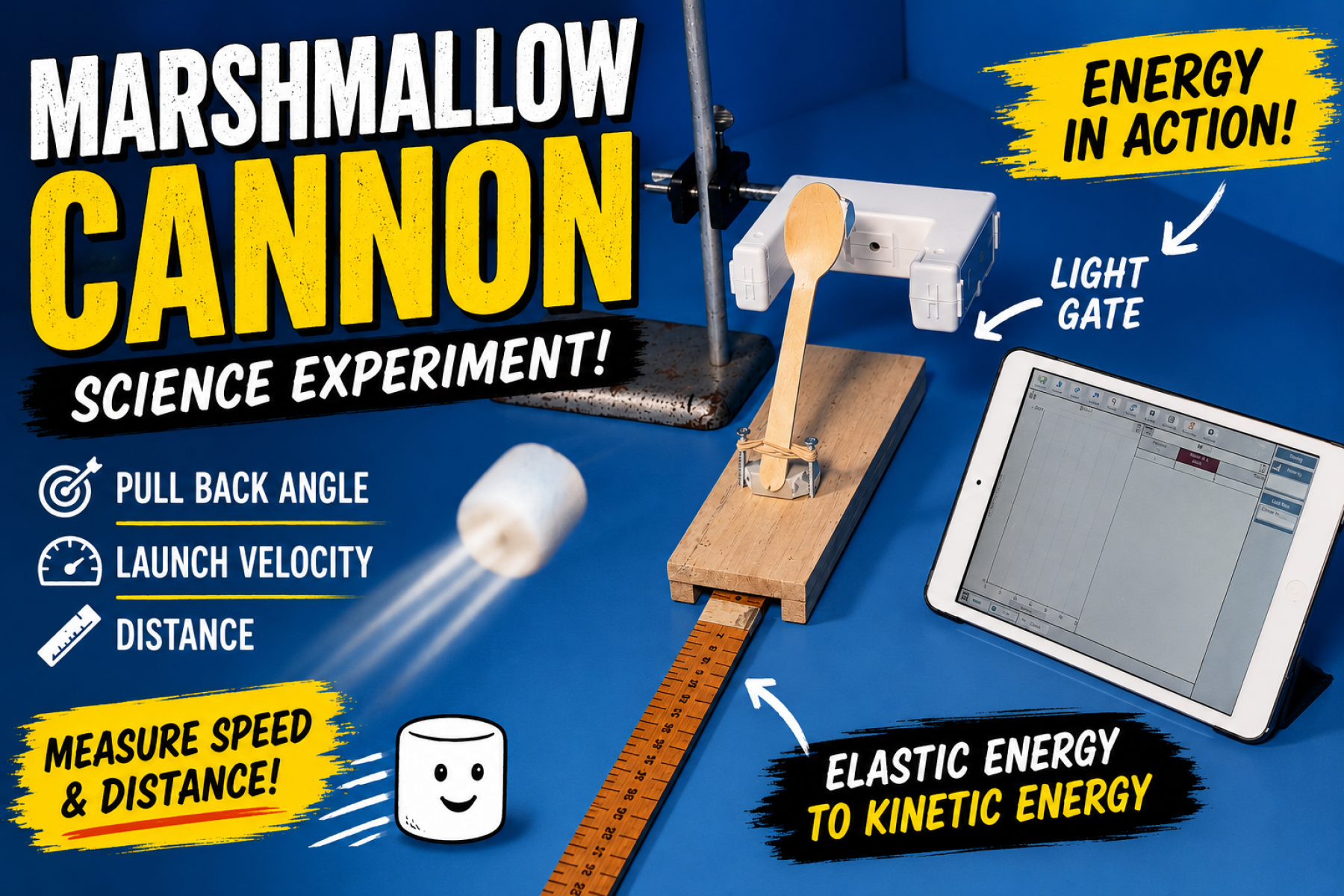
In this fun, hands-on physics experiment, students investigate how elastic potential energy is transferred into kinetic energy using a simple marshmallow cannon. By changing the pull-back angle and measuring both launch velocity and distance, learners can clearly see how stored energy affects projectile motion.
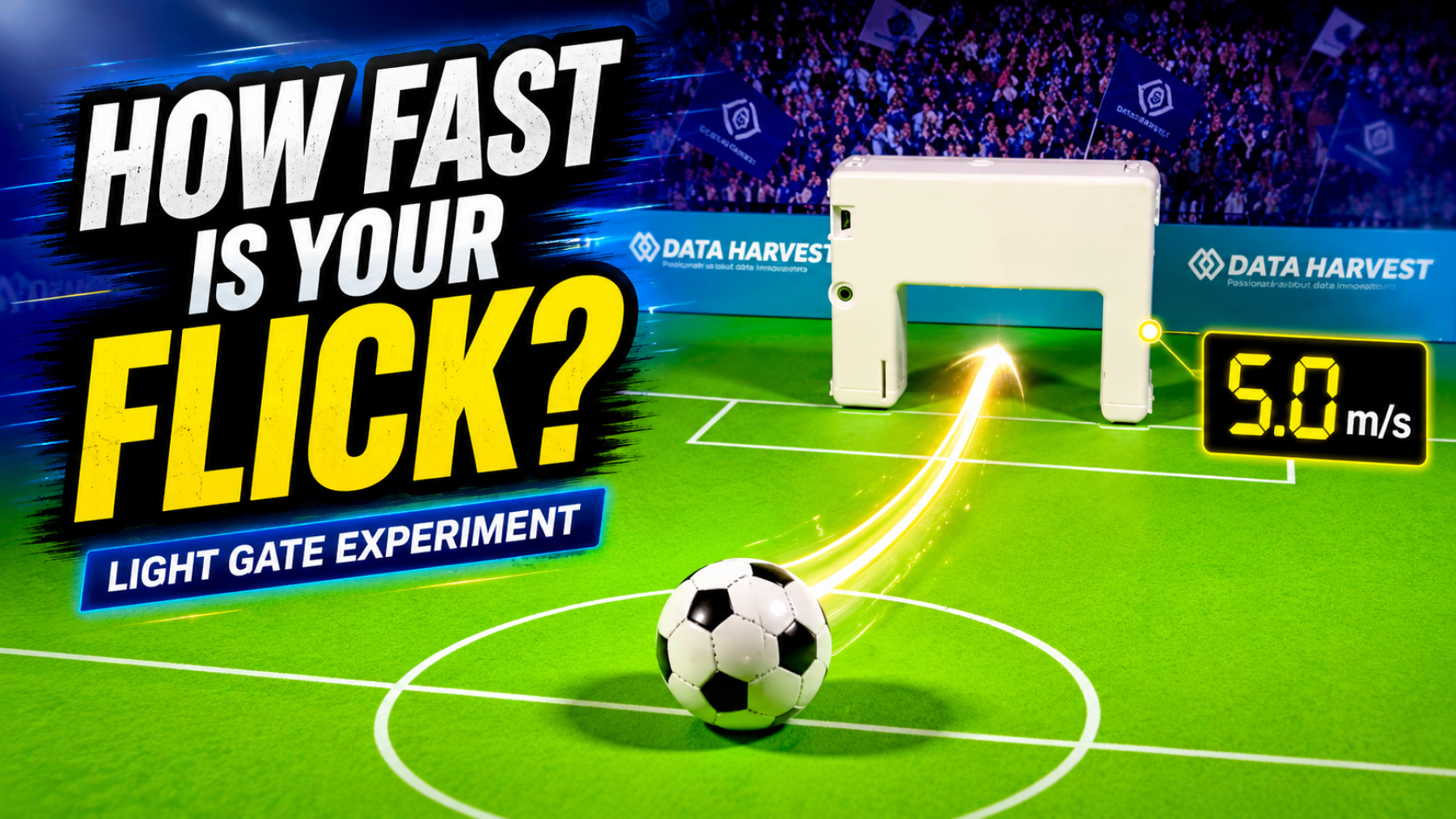
Using a Data Harvest Light Gate with EasySense software, this practical turns a classroom catapult activity into a measurable science investigation, helping students collect accurate real-time data rather than relying on stopwatches or estimates.
See the full setup, application and results of the marshmallow cannon practical in the video below.
By the end of this activity, students will be able to:
The marshmallow cannon is created using a spoon fixed to a base with elastic bands. When the spoon is pulled back, the elastic bands stretch and store elastic potential energy. When released, this stored energy is transferred to the spoon and marshmallow, launching the marshmallow forward.
The Light Gate is positioned so that the spoon or interrupt passes through the sensor at the moment of launch. This allows the launch velocity to be measured accurately using EasySense.
A tape measure is placed along the floor from the launch point so students can record the horizontal distance travelled by the marshmallow.
When the spoon is pulled back, the elastic bands stretch. This stores elastic potential energy. When the spoon is released, the stored energy is transferred into kinetic energy, causing the marshmallow to move.
The greater the pull-back angle, the more the elastic bands are stretched. This usually means more energy is stored and transferred, resulting in a higher launch velocity.
A higher launch velocity generally allows the marshmallow to travel further horizontally, although the relationship is not always perfectly linear because air resistance has a noticeable effect on light objects like marshmallows.
Students should observe that:
A Light Gate provides a more accurate way to measure speed than a stopwatch because it records the moment an object interrupts the beam. This reduces human reaction time errors and allows students to capture fast launch events more reliably.
This makes the practical ideal for introducing students to accurate timing, data logging and real-time measurement in physics investigations.
This experiment links directly to projectile motion, energy transfer and forces. The same principles can be seen in sports, engineering, launching systems and any situation where stored energy is released to move an object.
By using simple classroom materials alongside accurate data logging equipment, students can connect everyday observations with measurable scientific evidence.
The marshmallow cannon experiment is a fun and memorable way to explore energy transfer and projectile motion. By adjusting the pull-back angle and measuring both launch velocity and distance, students can clearly see how stored elastic potential energy affects motion.
With a Data Harvest Light Gate and EasySense software, the practical becomes a more accurate and engaging investigation, giving students real data they can analyse, compare and explain.
Explore more:
Take a look at the following articles from the same topic.